4 Years of engineering
A short and doable roadmap of engineering that every student can follow.
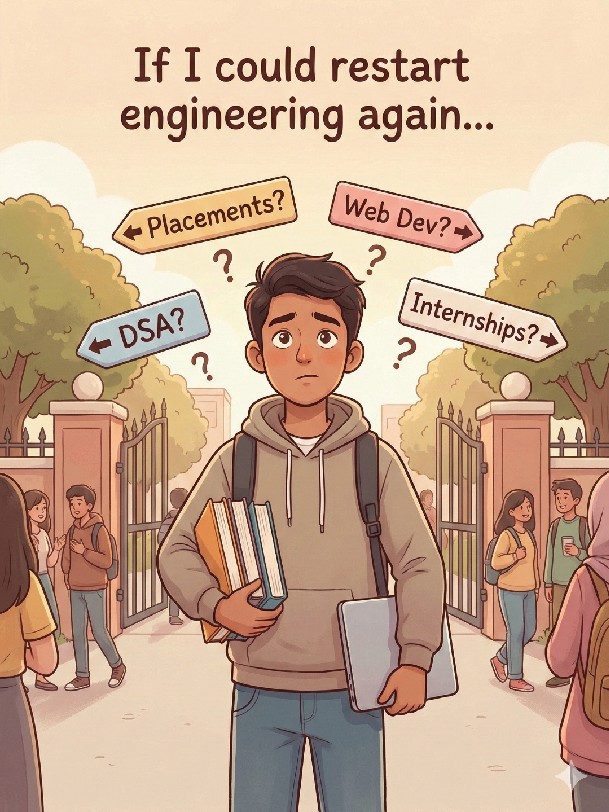
If I could restart engineering again, I wouldn’t begin with coding, DSA, or even placements. The truth is, in the beginning, you don’t really know what matters. You’re just standing there with too many directions in front of you…
Placements, web development, internships, DSA and no clear idea of what to pick.
Most students try to rush into something because everyone else seems to be doing something. But if I had to start again, I would slow down instead of speeding up. I would focus on clarity over urgency. Engineering is not a race you win in the first year. It’s a long game, and the people who win are the ones who understand where they’re going.
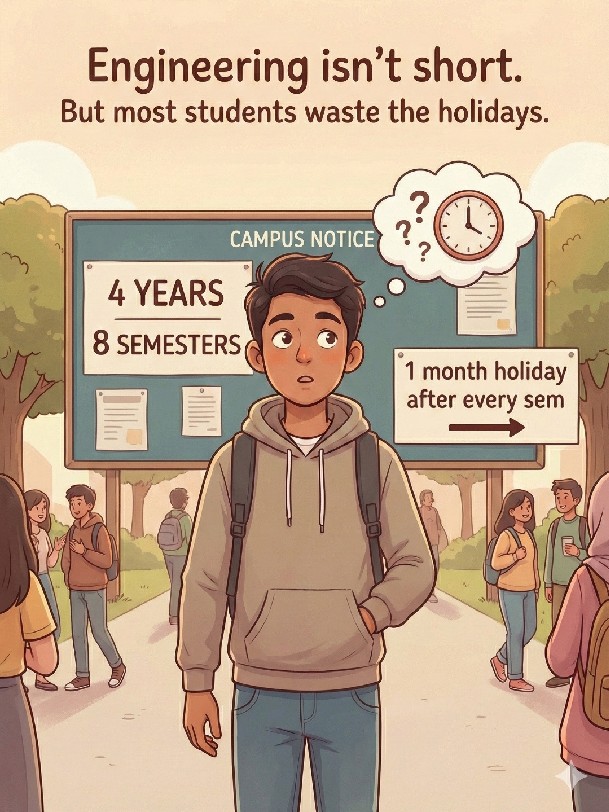
Engineering isn’t short. It’s four years long, divided into eight semesters. And in most Mumbai colleges, there’s almost a one-month break after every semester. If you actually calculate it, that’s around six to eight months of free time across your entire degree.
That time is not just “holiday.” It’s leverage.
The problem is, most students treat it like a break from life. They rest, scroll, waste time, and tell themselves they’ll start later. Then suddenly final year arrives, placements begin, and panic kicks in.
What people don’t realize is that outcomes are not decided in the final year. They are decided in those quiet one-month holidays that nobody takes seriously.

The first semester, honestly, should be about living your life. There is no need to rush into anything. You’re in a completely new environment, surrounded by new people, new experiences, and a completely different pace of life.
Make friends. Sit in the canteen longer than you should. Go out, explore your campus, attend random events, and just enjoy the phase.
Because later, when everything becomes serious, you won’t remember the tutorials you watched. You’ll remember the people, the laughs, and the small moments. And more importantly, this phase builds your comfort and confidence. It helps you settle in mentally, which is far more important than starting early and burning out.
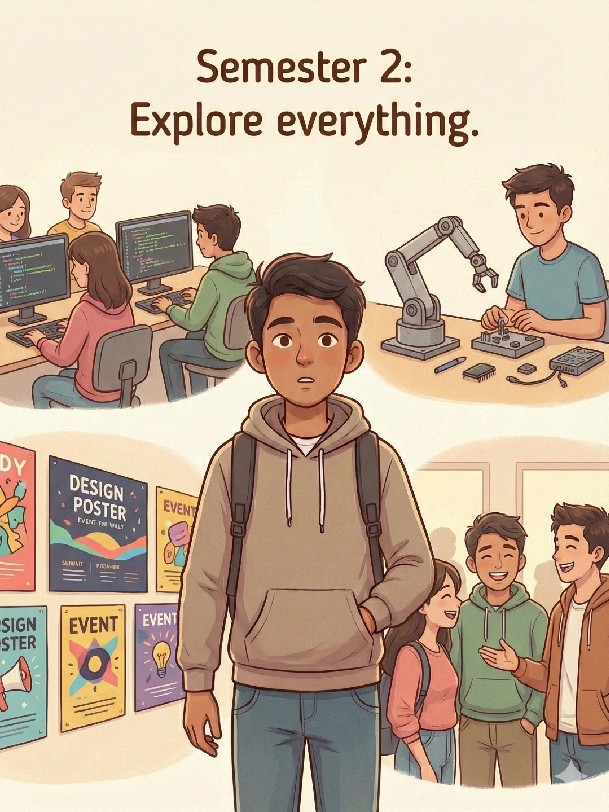
By the second semester, things should start shifting slightly—not towards pressure, but towards curiosity. This is where exploration begins.
You should start interacting more with seniors, joining clubs or committees, and putting yourself in environments where you’re exposed to people who are doing interesting things. This is also the time to explore different domains like web development, app development, game development, design, or even DevOps.
The goal here is not mastery. It’s awareness.
You’re trying to figure out what excites you enough to sit and learn without forcing yourself. Use YouTube, talk to seniors, try small things. This phase is about discovering direction, not achieving results.

After the second semester comes your first real turning point—the one-month holiday.
This is where I would get serious for the first time. Not in a stressful way, but in a focused way. I would pick one domain and commit to it for that month. Let’s say web development.
I would start with the basics—HTML, CSS, Tailwind CSS, and JavaScript. These are not difficult, and more importantly, they are enough to get you started.
You don’t need multiple courses or perfection. You just need consistency. Even 4–5 hours a day for a month can completely change your confidence level. By the end of this phase, you won’t feel lost anymore. And that clarity is more valuable than any skill at this stage.
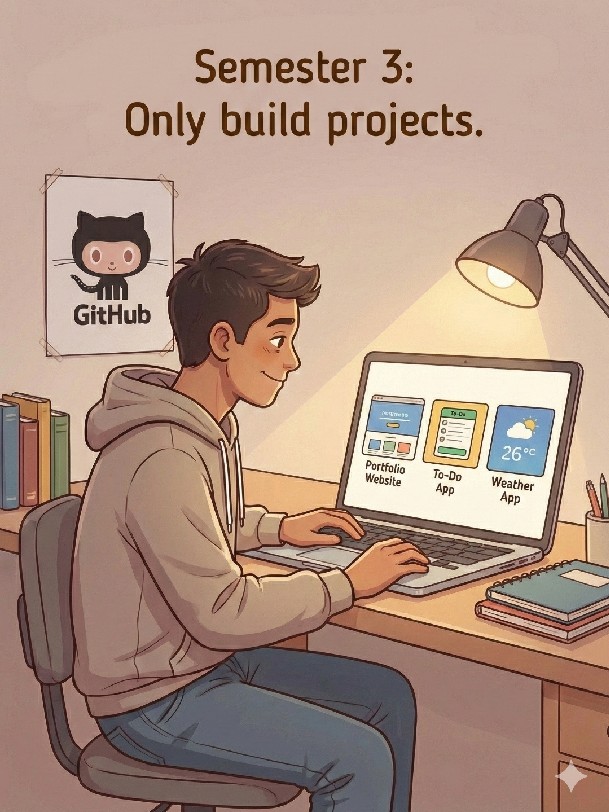
In the third semester, the focus should shift from learning to building. This is where most students make a mistake—they keep consuming tutorials instead of creating something of their own.
I would start building small but complete projects. A portfolio website, an expense tracker, or a simple weather or news app using APIs. These projects don’t need to be perfect or unique. They just need to exist.
The real learning happens when you try to build something and get stuck. That’s when you understand how things actually work.
At the same time, I would start pushing everything to GitHub. This is where your identity slowly shifts from being just a student to someone who builds.
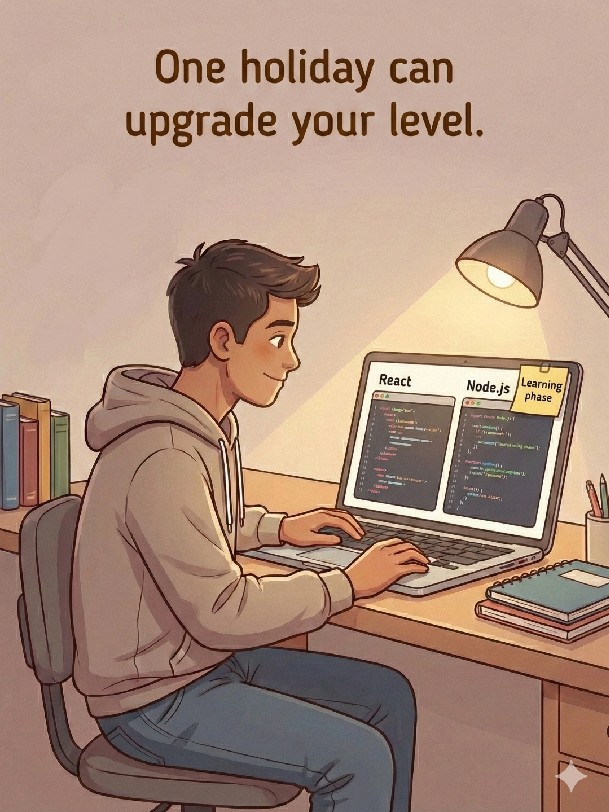
After the third semester, the next holiday becomes an upgrade phase. Now that you’re comfortable with the basics, it’s time to move forward.
This is where I would learn React, Node.js, and MongoDB—not in extreme depth, but enough to understand how full-stack applications work. The goal is to connect the dots between frontend, backend, and database.
This phase is important because it changes your perspective. You stop seeing things as isolated concepts and start seeing them as parts of a system. That shift is what makes you feel like a real developer.
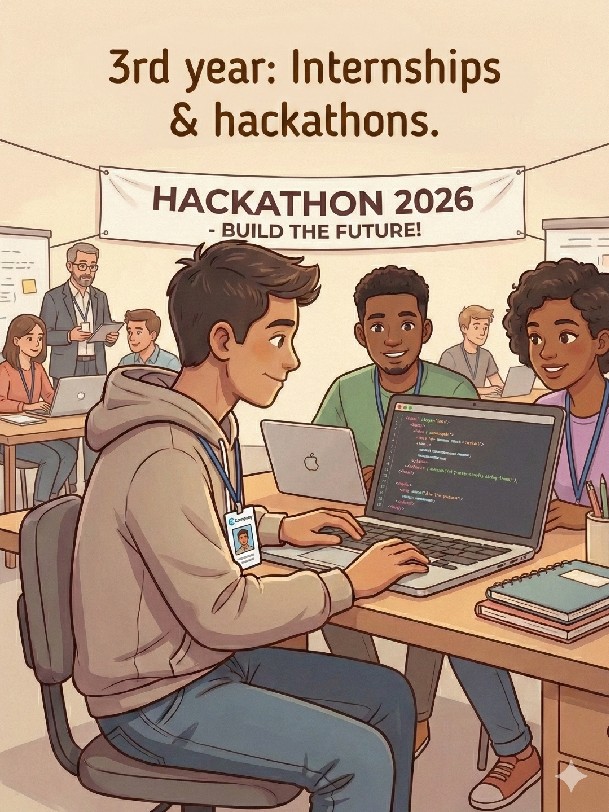
By the third year, the focus should move towards real-world exposure. This is where internships and hackathons come in.
I would apply to a large number of internships—around 100—without overthinking. Realistically, only a few will respond, and that’s completely normal. The process itself teaches you how the industry works.
Hackathons are equally important. Not because you have to win, but because they push you to build under pressure, collaborate with others, and think practically. Even participating in two or three hackathons can significantly boost your confidence.
This phase is where you stop preparing and start experiencing.
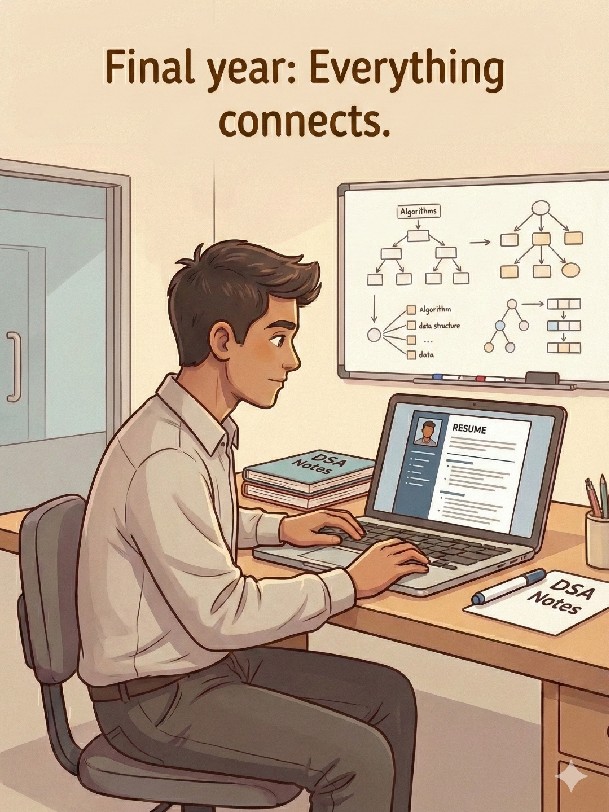
By the time you reach your final year, everything starts connecting. The projects you built, the internships you did, the hackathons you participated in, and the concepts you learned all begin to make sense together.
You’re no longer confused about what to do. You have a clear understanding of how to approach problems, how to learn new technologies, and how to build real systems.
Placements become just one option among many. You’re no longer dependent on a single path, because you’ve built enough skills and exposure to create your own opportunities.

At the end of it all, one thing becomes very clear—you don’t need to be extraordinary to do well in engineering.
You don’t need to study for 12 hours a day. You don’t need to be the smartest person in the room. What you actually need is direction.
Most people are willing to work hard, but they don’t know where to put that effort. That’s why they feel stuck.
If you have clarity, even average effort compounds into something meaningful over time.
And if this helps even one person feel a little less lost and a little more confident about where to start, then it has done its job. 🤍